



 Contact
Hey, y’all! Welcome back to episode 18 of the Southern Fried eCommerce podcast from EYStudios. Co-host Jay Brimberry begins this week’s very special 18th episode off with an attempt at dropping a Yeezy line, “Eighteen years, eighteen years. And on the eighteenth birthday, he found out it wasn’t his?” He does interject though that this podcast is EYStudios’ baby though. We quickly moved on to introduce co-host Emily Faulkner and the guest for this episode Jessica Richmond, EYStudios’ digital content specialist.
And then conversations turned to the weather. A winter storm moved across the Southeast United States recently and baffled those of us at EYStudios’ home office in Atlanta. Emily spent her snow day playing video games and we know what happens when video games are mentioned around tech people: tangents. After an 8 minute rant about Emily playing Fallout 4 again, Jessica anxiously awaiting Horizon Forbidden West, and Jay diving headfirst into Ghosts of Tsushima after finishing Guardians of the Galaxy last week — we began the discussion of this week’s biggest news in eCommerce.
First, we started with an update on EYStudios’ latest blog posts, which can be found here:
- Southern Fried eCommerce Episode 17 Recap
- Which Digital Marketing Services Should I Use For My Business?
- Common Mistakes That Doom Small Business Websites
We then jumped into our first article of the week, “Ecommerce Design Is Critical But Misunderstood” from Practical Ecommerce. The article discusses the importance of design for small and mid-size eCommerce businesses when it comes to competing with giant design-agnostic sites like Amazon. Jay pointed out that this article goes into detail about a lot of the benefits behind services like EYStudios where we offer full site creation that includes design, branding, usability, and all the data collection elements that help determine who a business’ audience actually is.
He and Emily continue by agreeing on the fact that a lot of the big box stores are coasting on their name recognition.
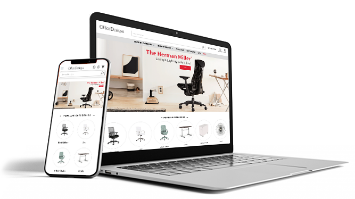
EMILY: Me and my boyfriend were trying to find a really nice office chair so I went on OfficeMax or Office Depot, one of the many office stores — and it is such a pain to go through. It feels so old and outdated, which is hilarious because we’re always kind of talking about how people need to be hip and updated but they’re really just coasting on their name to get through. And all of those really nice Shaq-sponsored office supplies.
JESS: I worked part-time at Barnes & Noble and the interaction we had with the website in the brick and mortar store was one of complete frustration. We hated the website. It was probably our number one enemy and it was our own website. Because people would come in with expectations that we couldn’t fulfill in the brick and mortar store. There was a complete separation between those two — basically companies is the way they operated it. People would come in and say “well the website says you have this book,” but we didn’t actually have it in stock.
EMILY: I absolutely had the same issue where I showed up to the Barnes & Noble and I was like “hey, I tried to look by myself. I’m trying to look for this book, do you guys have it?’ And they spent 25 minutes walking around the store, and it was one of those two level Barnes & Nobles, and there’s all these people and they’re on their radios trying to hunt this down. I’m officially embarrassed because I’ve elapsed 20 minutes of these people’s time looking for one book. And they’re saying ‘it’s not in their system,’ they thought maybe it was in the back. And I’m like ‘hey, I’m not that stressed about getting this book.’ But I’m assuming that the reason they’re hunting this down for me for 25 minutes is because they’ve had many a person yell at them.
JESS: Yep! That was most of my day, tracking down like four books in an eight-hour shift. But, yeah, there was just a disconnect between the website and they just didn’t put any effort into maximizing what their website was doing with design, there was no optimization, etc. They had to switch over for the pandemic to online orders and curbside pick-up orders and they had people calling the store trying to figure it out constantly. There was absolutely no cohesion. You would think with someone as large as Barnes & Noble they would get this figured out but they just don’t care enough to have it figured out.
EMILY: I think that’s what is super great about, like you were saying Jay — about really thinking about things as a whole. Like for small businesses, it’s so important to really think through every aspect of your design because you are the stores that make everything with love. You’re not the big box corporate, you guys actually still have the ability to have a heart.
JAY: You know your customer. With these small businesses, medium-sized businesses one of the things we often talk about is zigging when they’re zagging. And one of the ways you can zig is you have the ability to know your customers better than Amazon will. And Amazon’s customers are the world and if your goal is to go after the world, that’s not a good goal. You should know the demographics. You want to control the demographics of 18 to 25 year old females who are into waterpolo. Okay, great then let’s design, let’s know what these folks like, let’s know how they speak and go from there.
They even give a good example here, ‘Kencko, which sells nutritious food products, applies emojis and no-caps sentences and words that mimic the messaging tools Millennials aged 25 to 40 use daily.’ So even going so far as using emojis to kind of mimic the way a younger generation of people — and I might not like it — but the way they can talk and what they get drawn to. So even thinking about it in that way, it’s interesting to me.
EMILY: Oh absolutely, that’s what Jess does for most of her workday. She has to sit and switch into different mindsets of okay this is the type of content for each particular client and vertical.
JESS: Yeah, I have to put on my military hat sometimes and then I have to go and switch into writing for toddlers. And being able to understand the audience, really being able to understand who these people are, what they talk like, what words they use, and like the article was saying sometimes no-capitalization is a part of a brand. Something that small can really make a difference in how you come across on the internet and how authentic you can feel to an audience.
Jay then continued on to the next section of the article that discusses strategy and the importance of mini-goals outside of sales. Examples of mini-goals given in the article include newsletter sign-ups, free file downloads, social media follows, and free consultations. The article encourages business owners to have their website optimized for these mini-goals as well as sales in order to keep customers in their workflow. Jay thinks this is grade-A advice and asks Emily if this is something she advises clients on.
EMILY: Oh absolutely, I think this is so great. Like you were saying, Practical Ecommerce is pretty much just giving them the best advice possible. And for us, we do a lot of the same. We look at what that major goal is and I love optimizing each baby step to get there. And I think for a lot of clients it’s a little confusing at first because they’re like ‘why are you so focused on this?’ And it’s like ‘well, it’s part of the whole picture.’ Once you fit all of the puzzle pieces together you can complete the goal you’re trying to achieve. I think for a lot of people they’re always thinking about that one thing that’s just going to magically click, everything’s fixed and you’re making tons of money. But like they said, all these mini-goals add up and complete that full picture. So listen, there’s a method to the madness.
The last section of this article discusses how content is a critical part of the design process of an eCommerce site. The article suggests starting with content creation prior to design and not relying too heavily on templates.
JESS: They’re right on the money again with what they’re saying about content. You have to think about every single page and think: is it a dead end? How is someone going to interact with this page? They might not read every word on it, but if they do, is it going to benefit them? Is it going to benefit Google and SEO rankings and all of that good keyword stuff? Also, you have to think about, like they were saying, when you get to the bottom of the page of a newsletter sign-up, where are they going to go? Maybe it’s well now you should follow us on social media or maybe now go back to our product page. Or maybe you get to that 404 page and you’re kind of a funny, lighthearted company. Maybe you say something like ‘you’ve reached a deadend, sorry turnaround!’ and you click this button to go back to your products. You really need to find your voice and bring it to every single aspect of your website so that your customer really knows who you are.
JAY: Absolutely. And one of the things I hope we do just a little bit differently here at EYStudios is really thinking about how copy and design can go hand and hand. When you work with just an SEO company, and we’ve seen this over and over again, they’ll say SEO and content are king. But if you’re working with a design agency they’ll say usability is king and SEO is nice but SEO needs to come over into this little corner right over here. Really beginning to mesh, like you said Jess, the content working with the functionality and the functionality playing off of the content, that is the king. Let’s be honest, very few people are going to sit there and read long form SEO paragraphs, blogs, etc., with a keyword repeated over and over trying to get Google to index your site the way you want it to be indexed. Very few people are going to read that and it can become filler and detrimental to the usability health of your site. But really when you can get a company that’s looking at both of these aspects and really put them on equal footing as they should be. One’s really not more important than the other and we can have a debate about that but the way I see it is that they’re equally important and bringing the two together is the key to a good site. Without a doubt that’s something we always need to be thinking about. And something a small, medium-sized business owner needs to be thinking about as well; ensuring that the design is friendly, usable and it’s bringing out the best aspects of their brand, their merchandise, and their marketing opportunities.
The next article we discussed in this episode was, Walmart U.S. President and CEO John Furner on the ‘next normal’ for the retail industry. This is an article coming out of the NRF 2022 conference: Retail’s Big Show discussing a changing of the guard at NRF with Qurate Retail, Inc. former President and CEO Mike George stepping down from his two-year stint as NRF Board Chair and John Furner, president, and CEO of Walmart U.S., taking his place. The new board president had some thoughts on the ‘next normal’ for retail with a priority being shopping accessibility for customers. Jay agrees that the way of the future is allowing customers the opportunity to shop from you in as many different ways as possible whether that’s in-store, on your own website, on a 3rd party website, via a delivery app, etc. He then asked Jessica how she starts her shopping journey.
JESS: I’m one of those people that likes having things delivered. I’m chronically ill so I don’t really like having to walk around grocery stores if I don’t need to. However, with the supply chain issues and now with the weather and labor shortages, there’s been a shortage of deliveries available. People are trying to use it more and more and stores can’t keep up. I was looking for one particular ingredient, I have a baking business on the side and I was looking for dairy-free whipping cream and I had to go to five different grocery stores to get it and by the end of it I wanted to walk into traffic. But yes, I agree, stores really need to be focusing on offering as many avenues to get their products as possible.
Emily is also a fan of getting items as soon as possible but notes that there seems to be a rise in foot traffic in stores lately. She mentions Barnes & Noble being busy every time she goes in despite a supposed rise in ebooks. She speculates that it may be the delivery shortages or it may just be people being cooped up from the pandemic and just wanting to get out.
Another point brought up by the NRF article is that the ‘next normal’ for retail should be diversified. They specifically mention hiring a more diverse workforce. Jay says he obviously agrees but wants to discuss exactly why this is a good idea beyond just the moral given.
JAY: It’s also a good thing for business. The more viewpoints, the more visions you can bring into your company — especially when you are a retailer like Walmart and you’re trying to attract everybody, when you are trying to market to a general populace. The more individuals that you can bring into that fold from different walks of life and give their story and therefore get those stories out to your customers, well that’s good for business, right?
JESS: Agreed. This is going to be the Barnes & Noble podcast but one of the things I enjoyed about working there was that we had a very diverse group of people who worked there. And we were able to make our own tables and recommend books ourselves. We had a young black girl that worked there and she put together a black romance table and that’s something that a middle-aged white man probably couldn’t do. And there were some people that were into Amish romances and they were able to put together that kind of display. Or they were into the stuff that Emily is into…demon romances and the like [EMILY interjects to ask to be left alone] and they could put that kind of thing together. But it’s important that all of these different people are able to put their viewpoints forward and showcase different products that are important to their culture or demographic. You’re able to not just have the Spanish language books in the back corner. They’re able to be showcased and explained by someone that is using them.
JAY: Absolutely and listen, you said it right? I think as we become smarter as a society or maybe just more intune as a society, I think that you could easily see that if Jay Brimberry, middle-aged white male tried to do the black female romance novel table or whatever, that’s the demographic, you’re going to be able to see through that so quickly. And it’s not real and your customers are going to be able to see through that. And again we’re talking about brand loyalty. And that’s brand suicide, it really is. It’s just not good business practice at all when you have someone that does not understand the demographic that you’re trying to target. And we’ve got to the point where you can tear through that like a wet paper bag.
Jay continued on to the last section of the article where it discussed supply chain and pricing. In the article, Furner says, “ ‘We’re in a rapidly growing economy with a high demand level,’ Furner said, ‘which has led to out-of-stocks, supply chain problems, and price increases. Two major things we hear about from our consumers are their health and safety and rising inflation. We as an industry need to work together to remove cost from the supply chain, to make sure our customers can afford what they need.’”
Jay points out that it’s easy for big box stores like Walmart or huge retailers like Mcdonald’s to talk about cutting out steps of the supply chain because they are the supply chain, but for smaller businesses that’s not always an option. He then suggests that there are ways for us as consumers to cut down on the supply chain and mentions farmer’s markets and local butcher shops. This started a semi-long diatribe amongst Emily, Jessica, and Jay where we determined that Jay is the only one who wants to save the turtles and that Emily prefers her vegetables without dirt on it. When Emily finally admits that she would be fine with a world full of Targets, Jay moves on to the next article.
This hopefully less contentious article from Forbes is Adobe Is Betting On An Omnichannel Future With Its New Tech For Retailers. [Note: EYStudios is an Adobe partner.] This article details some of the new changes to Adobe’s commerce technology including the addition of new payment services, customization tabs, and mobile messaging capabilities that would allow businesses to interact with customers in real-time, in-store via mobile push notifications. This new tech push comes alongside a recent partnership between Adobe and Walmart where Walmart is allowing Adobe customers a trial using their curbside pick-up technology.
While Jay believes this is a good thing he also argues that this is just another way that Walmart can look at what small- and medium-sized businesses are doing successfully and copy it. Emily agrees and thinks that’s why Walmart opened up their marketplace, in order to see what products were doing well and then copy it. Jay then brings up Amazon being a pro at analyzing their marketplace numbers and then coming out with an identical product to one that’s doing well but for cheaper. Emily agrees but also sees the upside for businesses to being on the marketplace because they are going to make more sales, they just need to be aware that there may be some trade-offs.
Jay then moves on to ask Jessica and Emily if they would like messages popping up on their phones while they shop at Target. Jessica said she would like it for places like Target but not when she’s just popping into the grocery store for two minutes to grab something quickly. She says that she likes all the current technology that allows her to navigate a store easier such as a store map on her phone or a product that has the aisle number you’ll find in your local store.
EMILY: It’s almost like the digital version of the blue light special. So in that I don’t hate it but like Jess said, if I’m just going in for two seconds and the thing is just like ‘bing’ ‘bing’ ‘bing’, I’m going to delete that so fast.
Jay says that he’s hesitant for companies to have that information from him but admits that’s him being “an old man” about these things and cites apocalyptic robot films as evidence. Jess then insults him by saying that there is a generational gap for these types of technologies and while younger generations are used to having their data out there, older generations aren’t. Jay takes offense at being referred to as part of the older generations and moves on to the last article of the episode.
Digital Ad Spending Outlook Blows Past Previous Forecasts from eMarketer details a few predictions in the eCommerce advertising sphere including a quadrupling of retail media ad sales in the next four years. In addition, the article suggests that search and social advertising will overtake search for the first time in 2022. Jay acknowledges that this is a huge change from people going to Google to search for things to now going to Facebook or Instagram. Emily agrees saying that she’s even started doing the same thing in her daily life. She mentions that because she’s of the generation where their data is already out there and has been for a while, she gets extremely catered ads on her social media feeds. “I love ease of use!” she said over Jay’s protests. She does say that she’ll never truly love big box stores, she prefers the closeness you can get from a small business but she does enjoy that big box stores are able to cater these ads directly to her needs. Emily argues though that small businesses are just as capable of putting out these catered ads even if they don’t have as much data as these big box stores. Jess agrees with Emily that she likes what big box stores are able to offer but prefers to get something from a smaller business.
JESS: I like the way small businesses are doing it too. I like buying from random clothing stores that randomly find out I’m obsessed with Harry Potter and don’t leave my house and somehow show me a sweatshirt that says “Homebody” with the picture of the Hogwarts castle. Like, you did it. You won. Congratulations, I bought it. And I’ve had a lot of comments from friends and family like you’re a really good gift giver, you give really unique gifts and I’m like ‘thank my social media?’ I don’t know, they come across and I’m like oh that’s good for this person, that’s good for this person. So I like my feed. Maybe some people don’t like their feed.
Jay says he hasn’t had as great of an experience with suggested ads as Emily and Jessica have and perhaps that’s why he’s not as in favor of it. He does mention that he clears his data from social media every now and then which might be messing with the ad offerings. He said he also tries to be diligent about clicking “this ad does not apply to me” but sometimes he’ll mark things like Georgia Bulldogs merchandise as “offensive” because he’s not a fan.
To bring it back to the previous articles, Jay points out that this all goes back to knowing the demographics of your audience and what platforms they’re using in order to really meet them where they are. If you’re targeting middle-aged men, TikTok might not be your best avenue, he argues, and while social media might be surpassing search overall it doesn’t mean that it is for your industry or your audience. Jess and Emily agree and close out the show by reiterating that all aspects of your site design, user experience, marketing, and advertising all need to be speaking to your audience and you need to be able to find out who your audience is — not just assume you know who they are.